
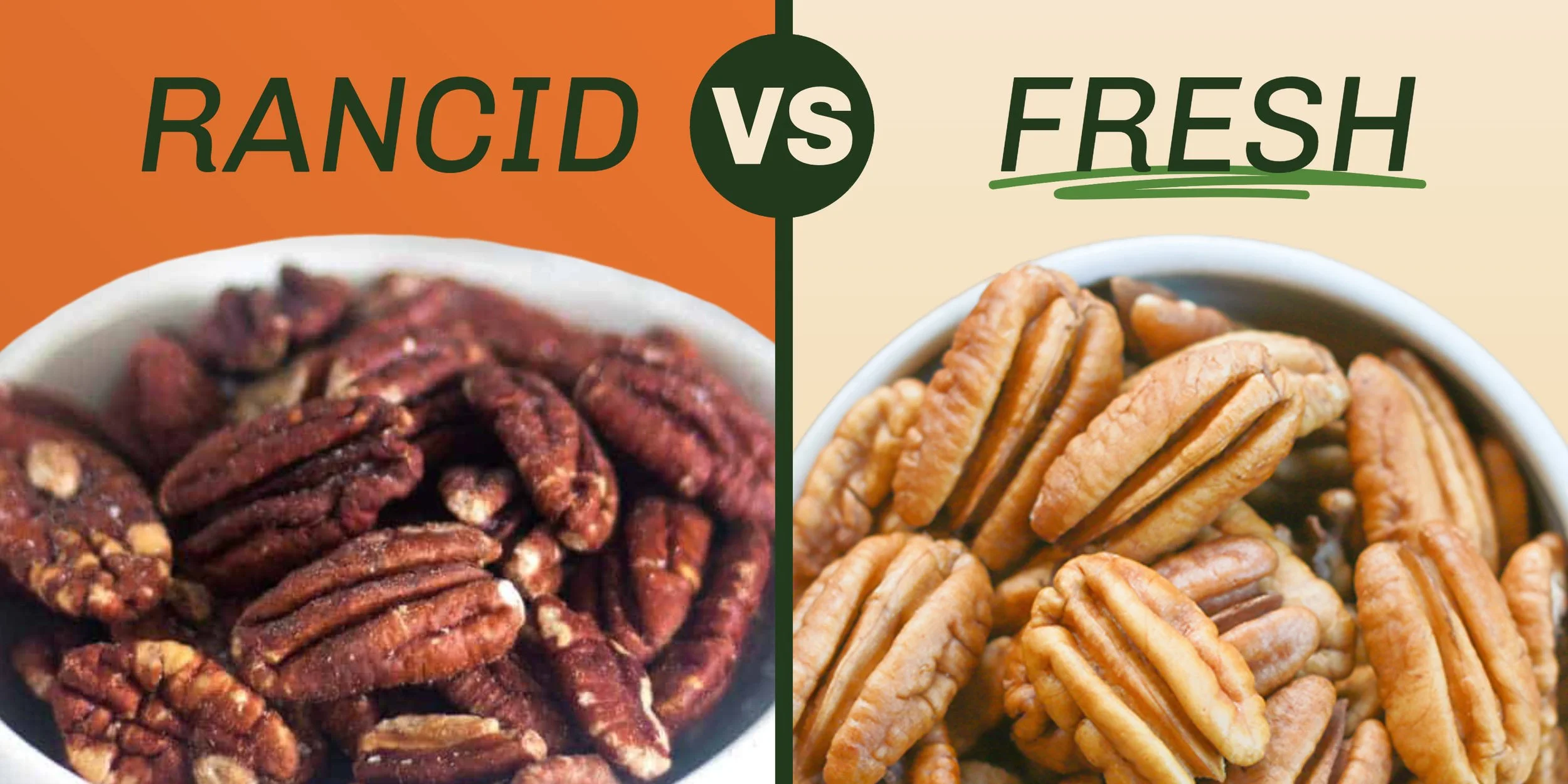
How to tell if your pecans are rancid and why it matters more than you think.
Most pecans sitting in the grocery store don't taste the way a pecan is supposed to taste.
That's not a criticism of anyone reaching for that bag. It's simply the reality of how commodity pecans move through the supply chain. Because of this, many people have never had the chance to taste a truly fresh pecan.
I grew up with a pecan tree in my backyard. I've known what a truly fresh pecan tastes like since I was a kid, long before Andy and I built a business around it. Golden color, plump appearance and a clean crisp crunch. Fresh pecans have a buttery mouthfeel and are a little sweet.
For the past decade, as consultants to the pecan industry, Andy and I always had access to farm-direct, harvest-fresh pecans, so that's what we ate. Then we realized this was a far cry from what sat on the grocery store shelf. We began to understand how many people had never had the chance, or known how, to get their hands on a truly fresh pecan.
We're on a mission to change that with Prime Pecan.
When Do Pecans Go Rancid?
Most pecans are harvested, shelled, and then sit in warehouses for months before they ever reach a store shelf.
During that time, rancidity creeps in as the natural oils inside the pecan kernels start to break down. The pecan no longer looks, tastes or fuels your body the way it did when it was freshly harvested.
It's the same thing that happens to a banana peel turning brown on the counter, or an avocado going from perfectly ripe to grey and mushy overnight. You can see it happening in front of you.
Pecans do the same thing. You have to know what you're looking for, and I'm going to show you how to tell the difference between a fresh and rancid pecan, so you can stop guessing whether or not your pecans are working for you or against you.
Rancid Pecans Are a Bigger Problem than Appearances
Think about what happens when metal sits out in the rain and starts to rust. That's oxidation: a slow breakdown that happens when something is exposed to air and time. The same basic process happens to a pecan kernel after it is shelled and exposed to light, air and time. The natural oils start to break down, and that breakdown is what we mean when we say a pecan has gone rancid.
Numerous medical journals explain the various ways that eating rancid, oxidized foods puts a strain on your body.*
Some people describe a heavy, sluggish feeling in the afternoon that shows up for no clear reason. Others experience inflammation that lingers, or a kind of mental fog that coffee doesn't fix.
Meanwhile, a few of the benefits that have been observed when people cut oxidized foods from their diet include:
More consistent energy through the afternoon
Less lingering puffiness
Less joint stiffness and less joint inflammation
Fewer snack cravings an hour after eating
Less brain fog and more mental clarity
You can be in control of how you feel. You do not have to accept low energy, inflammation, or aches and pains as simply "getting older." How you feel when you wake up, how much energy you carry through your day, and how clear your head feels: these are all things you have more influence over than you might think, starting with what's on your plate.
How to Check Your Pecans for Rancidity (A Checklist)
It's easy to test your own pecans and find out if they're fresh. Your body will thank you for following this simple checklist and choosing to invest in fresh pecans that fuel your body instead of breaking it down.
1. LOOK AT THE COLOR.
If your handful of pecans looks chipped, flaky, and dark reddish brown, that's a strong indicator they've gone rancid. Fresh pecans are golden and plump.
2. CHECK THE TEXTURE.
Snap a pecan in half. A fresh pecan gives you a clean, crisp crunch. A rancid one will feel mushy or limp, closer to a stale cracker than a fresh nut.
3. TRY THE BURN TEST.
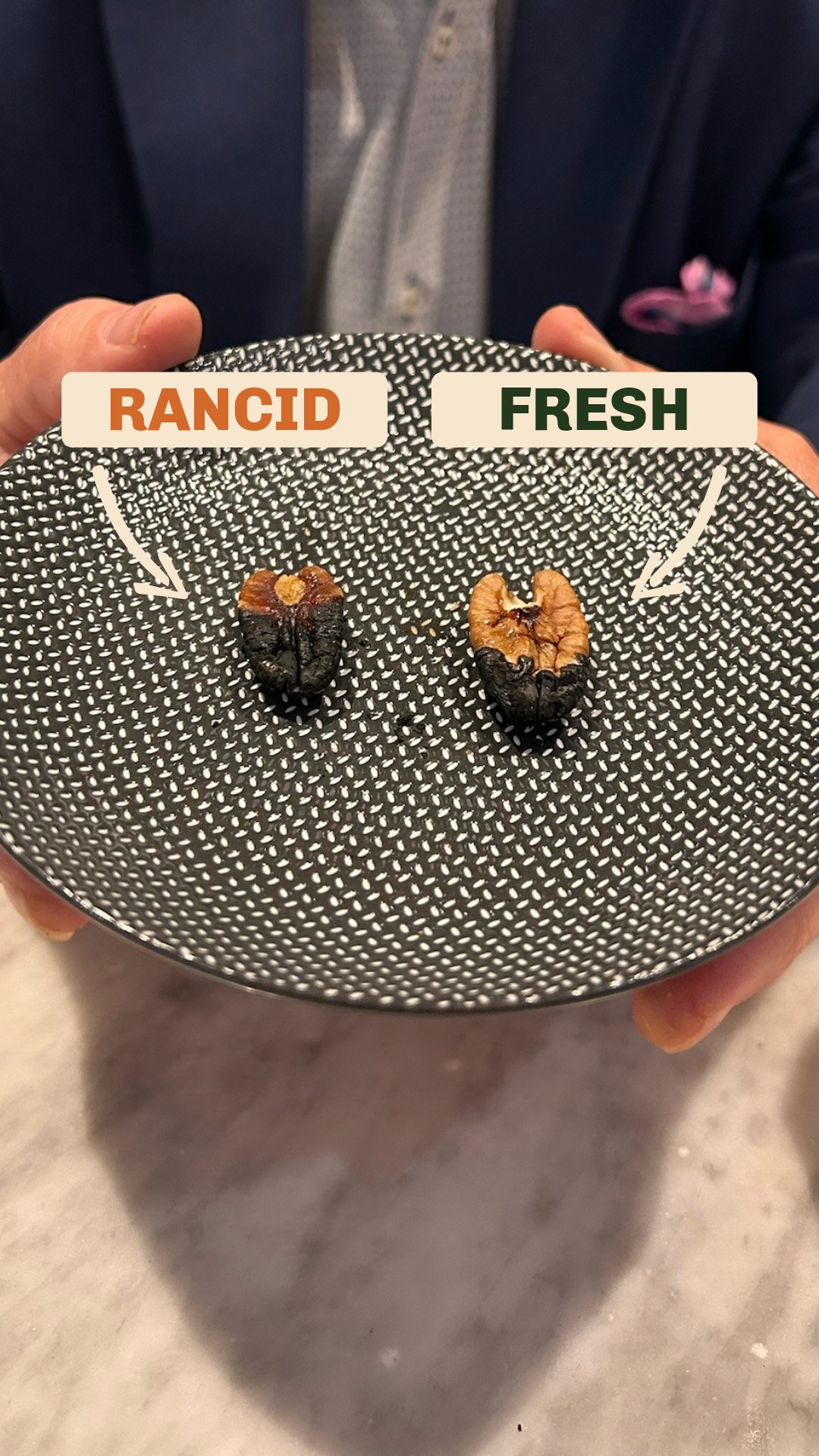
Have some fun with this one, in a safe space where nothing else can catch fire (safety first!), light a skinny end of the pecan kernel and observe what happens next. A rancid pecan gives off heavy, dark smoke and burns fast, often reaching its halfway point in only a couple of minutes (or less). The flame on a rancid pecan is big and dirty. A fresh pecan burns clean and steady, with little or no black smoke, closer to how a Bunsen burner in a high school chemistry class burns than a campfire. The fresh pecan kernel takes noticeably longer to burn down, often well beyond 6 minutes, depending on the original size of the kernel. The cleaner and longer the flame burns, the more clean energy is inside that pecan. The faster and dirtier the burn, the less energy (and nutrition) remains, and that difference affects how your body responds after you eat it.
4. TASTE IT, LAST.
Once the color, texture, and flame all point to fresh, go ahead and taste it. If it failed the first tests, we encourage you to stop and not eat a rancid pecan! Fresh pecans taste buttery, naturally sweet, and a little creamy yet still with a nice crunch. Once you taste a genuinely fresh pecan side by side with a grocery store one, the difference is hard to un-taste. People who make this comparison rarely go back to grocery store pecans afterward.
If your pecans fail two or more of these checks, you're not just missing out on the nutrition and energy you thought you were getting. Eating rancid, oxidized pecans place a real load on your body. It’s not a neutral decision. In this case, eating nothing would leave you better off than eating a rancid pecan.
Fresh Pecans Deliver Positive Benefits to Your Body
When fresh, clean pecans become part of a daily routine, alongside other real, whole foods, people report changes* such as the following:
Steadier energy through the afternoon, without a crash an hour after snacking
Feeling full longer, often through the whole afternoon, instead of reaching for something else twenty minutes later
Less lingering, low-grade inflammation and achiness in joints
Less worry about long-term risks that free radicals in your body which are created when you eat rancid foods (ie. chronic illness and disease)
Stronger immune system thanks to less strain on body paired with increased antioxidant and nutrient density found in fresh pecans
Best of all, Prime Pecans not only deliver a practical benefit to your body, but they’re delicious! As a shelf-stable, snackable crunch, you’ll look forward to eating them and not having to talk yourself into making a healthier choice.
Prime Pecan Delivers Fresh Pecans That Are Not Rancid
We found the problem of rancid pecans was pervasive over a decade of observation. When things didn’t change despite a mountain of research showing how to fix it and a steady stream of buyers all over the world asking for fresh pecans to be delivered, we decided to build the solution ourselves.
We built the infrastructure to make that possible, not just for the chefs and importers we'd always served, but for anyone who wants fresh pecans delivered straight to their door.
Every Prime Pecan is harvest-fresh and third-party verified clean, with the golden color, buttery flavor, and clean crunch of a pecan that hasn't spent months breaking down in a warehouse. The same standard we eat to fuel our international business and lifestyle is now available delivered to your door.
Order your Prime Pecan Box (exclusively offered to addresses inside the USA) and taste the difference for yourself. We think your taste buds, and the rest of your body, will thank you.
*These statements have not been evaluated by the Food and Drug Administration. This product is not intended to diagnose, treat, cure, or prevent any disease.
What People Ask About Rancid Pecans
-
Rancid pecans are dark reddish brown and often chipped, flake and shriveled in appearance, rather than golden and plump. They may also be mushy or limp when snapped in half instead of giving a clean, crisp crunch. They tend to taste flat or bitter instead of buttery and sweet.
-
Pecans go rancid through oxidation, a natural breakdown of the oils inside the kernel once they're exposed to air, light, and time after shelling. Most commodity pecans sit in warehouses for months before reaching a store shelf, which gives this process plenty of time to happen.
-
No. Rather, eating rancid, oxidized pecans places a load on the body. If a pecan fails a freshness check on color, texture, or the burn test, it's best to avoid eating it.
-
A fresh pecan tastes buttery, naturally sweet, and a little creamy, with a clean, crisp crunch.
A rancid or oxidized pecan tastes flat, sometimes bitter, and often has a mushy or limp texture instead of a crunch.
-
Prime Pecan delivers harvest-fresh, third-party verified clean pecans directly to your door within the USA, shelled and shipped without months of warehouse storage.